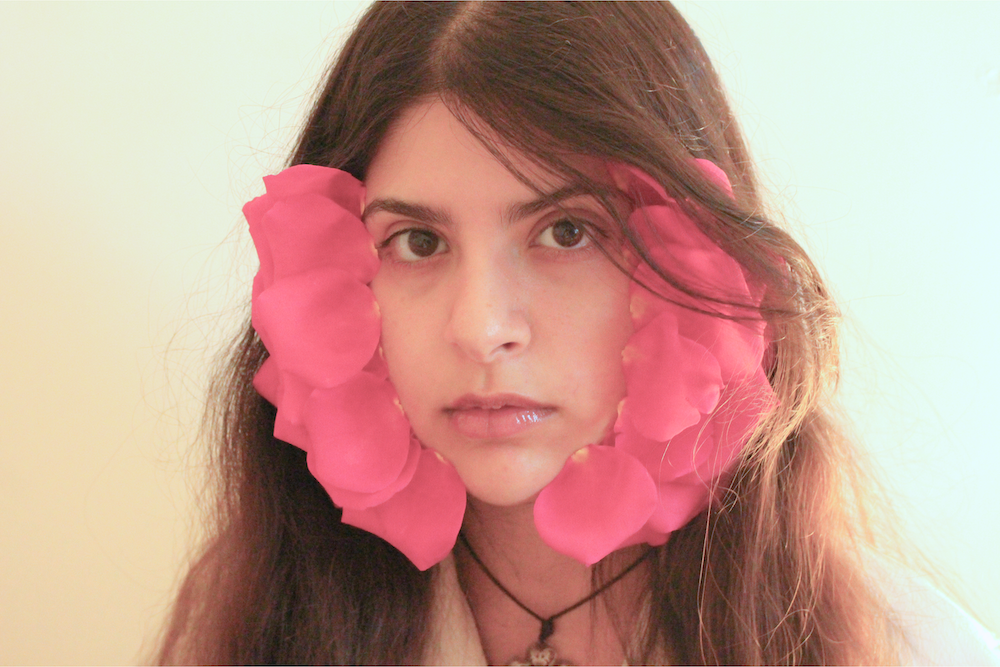
Ebril
Why Ebril Is Emerging as the Middle Eastern Voice Pop Has Been Missing
Twenty-two-year-old Ebril didn’t just drop a debut album — she built a whole new ecosystem and invited the world inside. The Iraqi-born, Toronto-based artist, born Huda Al-Hamami, has been quietly recording in the solitude of her bedroom for years, but In Copula, her self-produced full-length project blending folk, shoegaze, lo-fi ambience, and field recordings from Jordan, has propelled her from underground curiosity to one of 2025’s most magnetic new voices.
What makes the album’s rise remarkable is its origin story: an intensely personal, independently created body of work stitched together entirely by Ebril herself. She wrote every lyric. She played every instrument. She produced, mixed, and mastered the whole record alone. Before In Copula reached industry ears, it found its audience online. Its opening track, “Stranger In You,” wasn’t designed to be a viral hit — it’s a hushed, atmospheric drift built from nostalgia-soaked synths, soft acoustic strums, and a gentle chorus that barely rises above a whisper. But earlier this summer, TikTok listeners locked onto its emotional pulse, turning the track into a cultural moment.
More than 240,000 user creations later, “Stranger In You” has exploded past 1 billion views on the platform, pulling Ebril along with it. The viral wave translated into over 10 million streams across DSPs, with In Copula now averaging over a million weekly streams on Spotify alone. For an independent artist with no major-label backing at the time, that kind of momentum is rare — and telling.
As the buzz grew, labels took notice. This fall, Universal Music Canada announced that Ebril had officially joined their roster, a move that marks a pivotal shift in her rapidly growing career. For the artist, the signing is both validation and expansion. “As a young Canadian artist, I feel so blessed and grateful to have my vision and art supported,” Ebril said after the announcement. “It allows me to express myself through music.”
UMC President & CEO Julie Adam recalls immediately sensing something different. “The first time I met Huda was over dinner, and I didn’t want to leave,” she said. “I am completely awestruck by her artistic vision, curiosity, sense of humour, and overall view of the world. Ebril knows exactly what she wants to accomplish.” Her partnership with UMC arrives as she begins shaping new music planned for release in 2026. Rather than repositioning her sound, the label seems poised to amplify what already makes her singular — a rarity in the industry and a testament to the clarity of her vision.
To understand In Copula, you have to understand Ebril’s process; growing up between Iraq, Jordan, and Canada, she learned early how to navigate the liminal spaces between identities. She studied science before pursuing music seriously, a background that sharpens her attention to detail: the way a sound moves, the way an emotion blooms, the way environments leave fingerprints on memory. The album’s title, In Copula, hints at connection — between environments, between selves, between inner and outer worlds. Throughout the record, Ebril uses field recordings from Jordanian markets, insects droning at dusk, and ambient sounds from outside her bedroom window to build an immersive sonic landscape.
On “Stranger In You,” chirping birds and buzzing insects wash beneath a blend of electronic haze and acoustic guitar, creating a feeling of suspended time. Elsewhere, “Anticipate Heartbreak” moves toward shoegaze, with gauzy synths layered over hushed vocals while recordings from her old neighbourhood in Jordan flicker at the edges. The result is a kind of emotional cartography — mapping where she’s been, what she’s lost, and where she’s heading. Identity, adolescence, and transformation are the album’s core preoccupations. Tracks unfold like journal entries cracked open under sunlight, vulnerable but deceptively intricate. Despite the serenity of the sonics, the emotional weight is unmistakable.
Ebril arrives not only as a musician but as a cultural figure stepping into an overdue spotlight. She’s deeply committed to environmental and social justice causes, but she approaches them not through slogans, rather through presence, representation, and storytelling. For many young listeners — particularly those from Middle Eastern and immigrant backgrounds — seeing an artist like Ebril gain global visibility is its own form of empowerment.
Her ability to balance softness with defiance, intimacy with world-building, places her among a growing wave of artists who are reshaping what pop, indie, and electronic music can represent. And unlike many viral breakout acts, Ebril feels like an artist playing a long game.
With new music slated for 2026 and an international fanbase forming in real time, Ebril seems poised for a breakout year. But she’s approaching it the same way she created In Copula: on her own terms. The industry may be buzzing, but she still speaks like someone rooted in the quiet of her room — where birds chirp outside, where memory sits close, and where every sound has meaning.
If In Copula is only the beginning, Ebril is not just one to watch — she’s the rare kind of artist who can make the entire world feel suddenly, unexpectedly intimate.
A whisper, a field recording, a billion views: Ebril is just getting started.
About the Author