Beau James Wilding
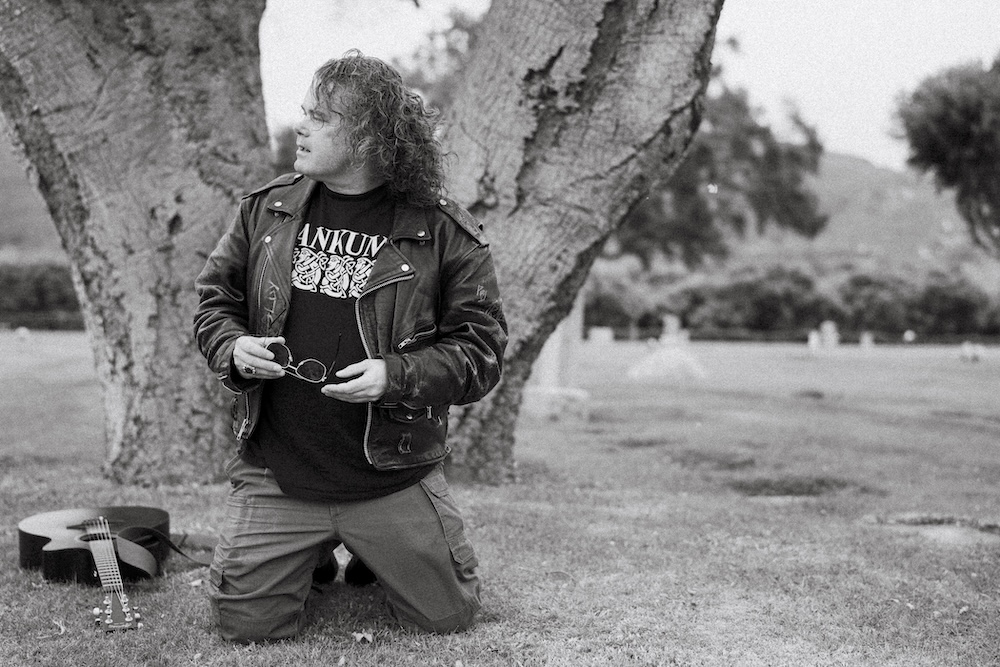
California musician Beau James Wilding has never been content to stay in one lane. With Food for the Wyrm, he sheds the traditional singer-songwriter label in favor of something darker, stranger, and far more immersive. The project’s debut album, A Wicked Huntsman, is a fearless collision of traditional folk, doom-laden drones, punk urgency, and metal weight—a record where centuries-old ballads stand shoulder to shoulder with original compositions, all bound together by an unflinching examination of grief, shame, addiction, betrayal, cruelty, and ignorance. Recorded between rural Ireland and California’s Ventura coast, the album transforms personal trauma into mythic storytelling, drawing from Celtic symbolism, Jungian archetypes, and the enduring power of folk music to illuminate humanity’s darkest corners.
Rather than wallowing in despair, A Wicked Huntsman treats darkness as a necessary passage toward clarity. Six Irish wildflowers become emblems of six defining wounds, while the mysterious figure of the “wicked huntsman” emerges as a seeker willing to confront pain in pursuit of growth. In this conversation, Wilding discusses the evolution from his solo work into Food for the Wyrm, the philosophy behind embracing mortality, the challenge of reimagining traditional songs, and why he believes the heaviest music can ultimately become an act of compassion, connection, and hope.
Food for the Wyrm feels like an evolution rather than just a new project. What was the moment when you realized this darker, heavier direction needed its own name and identity?
I’ve always wanted to be under a band name, being under my name was just a default because I couldn’t find other musicians to play with and I wanted to get cracking on recording and performing, so I just went by my name. playing mostly with DIY punk and metal style acts, and starting to build a band, I felt a little out of place being under my name. I don’t want or need to be celebrated–it is the art that should take center stage. The band name in general gives a lot of opportunity for world creation, making it another aspect to add flavor to the project rather than just a name. I spoke with a mentor who pushed me over the edge on this and encouraged me to go ahead and make the change to a band name.
How does Food for the Wyrm differ from the Beau James Wilding project, both musically and emotionally?
FFTW is me shedding the singer-songwriter association and giving myself permission to play the darker, doomier, edgier sounds I’ve been longing to play for years but wasn’t allowing myself to play because I thought I needed to grow up and play palatable music. I think there is a definite through line from seeing i god to A Wicked Huntsman” though. AWH makes sense tonally as a next step if you listen to them back to back. In reality, “seeing I god” was the record where I said “I’m not holding back anymore, I want to rock and get dark”. On AWH I’m giving myself permission to go deeper into heavier influences like neurosis or Sabbath, Sleep, Electric Wizard or even earlier, more sinister sounding Pink Floyd, also drawing more heavily from folk influences like Jrpjej and Lankum.
The name Food for the Wyrm carries a powerful image of mortality and transformation. What does “the wyrm” represent to you?
The name certainly bespeaks death and that is intentional. We will all become food for the wyrm, so make the best of life while you are above ground. That’s a huge part of it. But it also refers to the wisdom of darkness, silence and the transformation of decomposition. You can’t have the flower without the shit and visa versa. The serpent, or the wyrm has been a symbol of wisdom in a variety of cultures, and even rebellion in the biblical creation myth. Feed the wyrm of wisdom, autonomy and rebellion within the dark quiet place of your own heart.
Was there a specific experience or period of your life that opened the door to creating A Wicked Huntsman?
No. It was a long process of different factors converging and interacting. I’ve been playing folk music for years and listening to punk and darker music for years, and I’ve been trying to find ways to satisfactorily merge those two energies together. I’ve been playing The Blacksmith for around twelve years, was aware of the Unfortunate Rake and Nobody’s Fault for at least that long as well. I credit discovering bands like Blackbird Raum and Lankum with helping to give me license to occupy the worlds of metal/punk and folk simultaneously.
A Wicked Huntsman explores six traumatic experiences — betrayal, loss, shame, cruelty, addiction, and ignorance — each represented by flowers native to Ireland. How did that symbolic framework develop?
There is actually a story in the liner notes to the record that I wrote which describes the concept in detail, along with notes on each of the songs. I have kept a poem by Nietzche in my backpack for around sixteen years, thee epode to Thus Spoke Zarathustra. This is where “A Wicked Huntsman” comes from:
“- Old friends! how pale you look, how full of love and terror! No – be gone! Be not angry! Here -you could not be at home: here in this far domain of ice and rocks — here you must be a huntsman, and like the Alpine goat.
The “wicked huntsman” in the context of the poem and the album is on the hunt for self development, for challenge, for growth. The wise female archetype was inspired by Kali and by the archetype of the wise woman, the healer, the witch. She is a powerful, beautiful and learned being here to challenge the seeker to confront pain, to truly occupy the title of wicked huntsman by being “man” enough to experience what she is there to show him. I named her Lady Eve after a wise female character in Hermann Hesse’s Demien who served as a mentor and initiator of sorts.
Flowers are rich in lore and mythology and especially in Celtic mythology. This seemed a perfect way to tie in a sense of place to the story and the music since the album was recorded in Ireland and is very much influenced by Irish folk music.
The album is described as a journey of bringing darkness into the light. How do you approach turning painful experiences into something creative?
Meditate. It is a challenge every time and I still feel like I’m reinventing the wheel sometimes when I do it. But that is what alchemy is about, the process. When I write lyrics it starts with journalling and meditation, long stretches of time reflecting on the words and then more journalling and word arranging. It may sound counter intuitive, but the darkness feels like it comes out of me as an expression of love and compassion. When I sing this way I’m expressing my love for life and all being with my body, my carriage.
The title A Wicked Huntsman feels like it belongs to an old myth or folk tale. Who or what is the huntsman?
He’s the person who is not satisfied with the status quo. He wants to be fully alive even if that means pain, cold and alienation from society. He is not dubbed wicked because he himself is wicked. He is dubbed wicked by the hoi polloi who don’t understand or want to understand him. He is the outcast, the renegade, the black sheep or the lone wolf determined to live his life on his own terms.
The album blends traditional folk, punk energy, metal heaviness, drone, and psychedelic textures. What draws you to the meeting point between these worlds?
They all feel intensely alive to me with emotion and connection to the pith of life’s most rigorous experiences. All of those genres feel intense, authentic and of the people. And I happen to enjoy them all. So it’s my aim as an artist to distill many things that I enjoy into something new that I love that never existed before.
Folk music has always carried stories of hardship, death, love, and survival. What does traditional folk offer you that other genres don’t?
I think the first statement answers the question! Additionally, folk music is a lineage, a stream that goes back into an often mysterious, dark or unknown past. The songs are written about real, often traumatic life experiences, or many songs in the ballad tradition can also be fantastical tales but which relate to powerful archetypes or life experience. Folk musicians are not cover artists, they are curators, performers and song carriers. I’m fascinated by songs that can be traced back for several hundred years and I get a chill when I think of how that time in the collective western consciousness has smoothed them, changed them, refined them and ultimately is a testament to their veracity and emotional potency. They have lived on for a reason.
How do you balance honoring traditional songs while also transforming them into something completely your own?
I don’t know, honestly. I often feel like an imposter playing this music because I didn’t grow up singing these songs and I’m not really part of a folk music community. All I can say is, the songs and what they represent grabbed me and wouldn’t let me go. I had to spend some time with them and absorb what they had to show me, to play and dance with them and find the most sincere manner of expression I could find to sing them.
The album was recorded in Ireland with “Irish” Tom and Frank Martian before being completed in California. How did the locations and environments shape the sound?
In Ireland it was a residential situation, so we were playing music all day every day for several days. That really got us into a connected space where we were communicating really well musically. There’s a feeling of release that comes with that experience of just diving in fully to the music with no other care in the world. Back in Ventura I was able to work with JP Hesser of Castaway 7 Studios. JP and I working together is a great artistic partnership, I feel comfortable exploring weird ideas with him and just getting goofy around the studio finding ways to refine and dial in the sound. It’s a safe and intimate space to create with him.
The album includes original compositions, traditional re-imaginings, and covers from the folk lexicon. How did you choose which songs belonged in this story?
I would again posit here that the songs chose me, the story came later, then the drone pieces were added at the beginning and end, conceived as theatrical pieces to accompany the story. The first is the huntsman entering the forest at the beckoning of Lady Eve, entering his “long dark night of the soul” and the second finale drone piece is his re-entry as he is delivered back into the “marketplace” as they say in Zen with renewed purpose, clarity and passion to live.
Looking back at the album now that it is released, do you feel like you discovered something about yourself through making it?
I am learning more now as I reflect back on it and talk to others about it. That we must face pain in order to blossom is something that I need to learn on an ongoing basis in different life contexts. This record is hitting me with that concept emotionally right now pretty heavily.
What kind of live experience do you want people to have when they encounter Food for the Wyrm?
I want the audience to get lost in wonder and their own imagination but also be inspired to fight the demons, both within and outside their psyche. I don’t want to get too political, but folk music has always been by the people, for the people, not the ruling or billionaire class. This music is about humanity. Touching that humanity that we share through our hurts and joys and dramas is a way to connect and connection is the antidote for hate. Food for the Wyrm has no time for hatred of any people. The Wyrm waits for us all with no discrimination.
After everything this record explores, what keeps you moving forward?
The hope that another pair of ears will hear this record and it’s story and be inspired by it. That is what I want with all my heart. I want people to have the same or similar emotional reaction when hearing this record as I do. I want to connect with others with these concepts.
Official website of Food for the Wyrm.
About the Author