Nico
Long before goth music existed, Nico introduced a radically independent vision of what a female artist could be.
Guest Article by Diana Ringo
Look at that young, pretty woman in her satin dress, moving exactly like she was taught by the TV executives, singing in a bright, pleasant voice about love, then heartbreak, then love again — all delivered with the same curated sweetness, never threatening, never messy. Whether for the parents at home, or for the kids sitting near the screen, she is perfectly fine. Talented. Yes. Boring. Yes. Wait, why? Because every act is the same. All the time. Bubble-gum pop. Harmonized girl groups, rehearsed smiles, choreographed gestures — it’s a factory of sugar, distilled to the point of nausea. Motown adds sparkle and rhythm, folk adds seriousness, but all within the accepted lines.
This was the landscape of female-led popular music in the late 1950s and early 1960s.
And yet, the 1960s were changing. Across the Atlantic, Europe was producing films that looked like they belonged to another universe — stark, strange, often uncomfortable. Nothing like the endless soundstages of American television adorned with the same scripts and characters.
Then the camera cuts.
A tall blonde woman appears in a white suit, with band members dressed in black with dark sunglasses, singing in a brooding low German monotone that sounds almost detached from the room around her. She does not smile in order to be desirable or safe. She does not imitate warmth. She looks less like a pop singer than someone who wandered accidentally into the wrong film. From a Michelangelo Antonioni picture to “The Brady Bunch”.
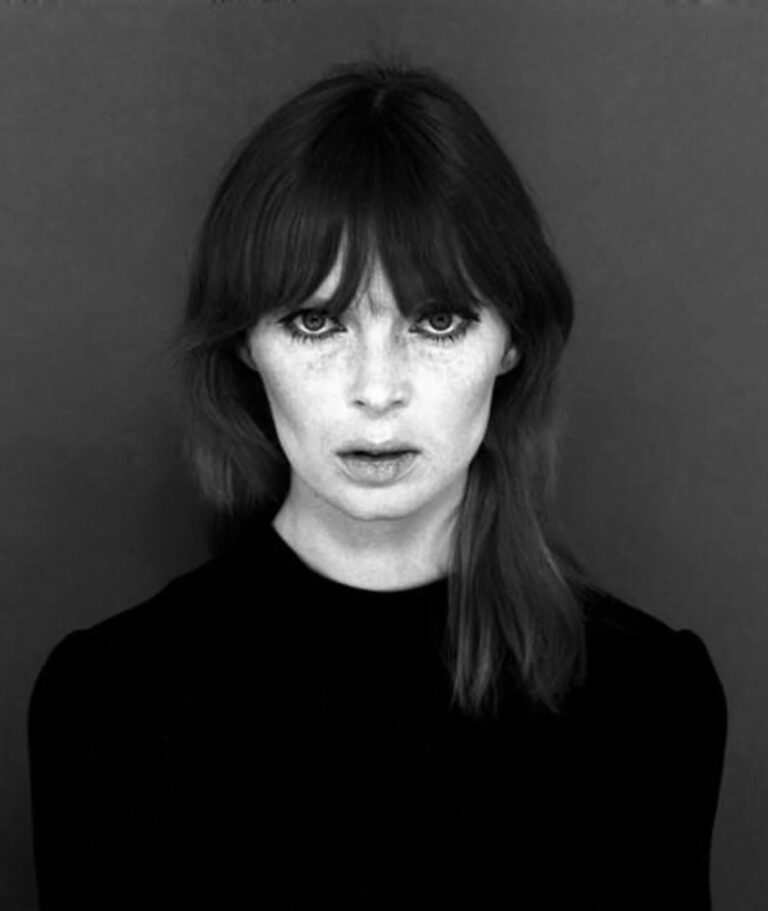
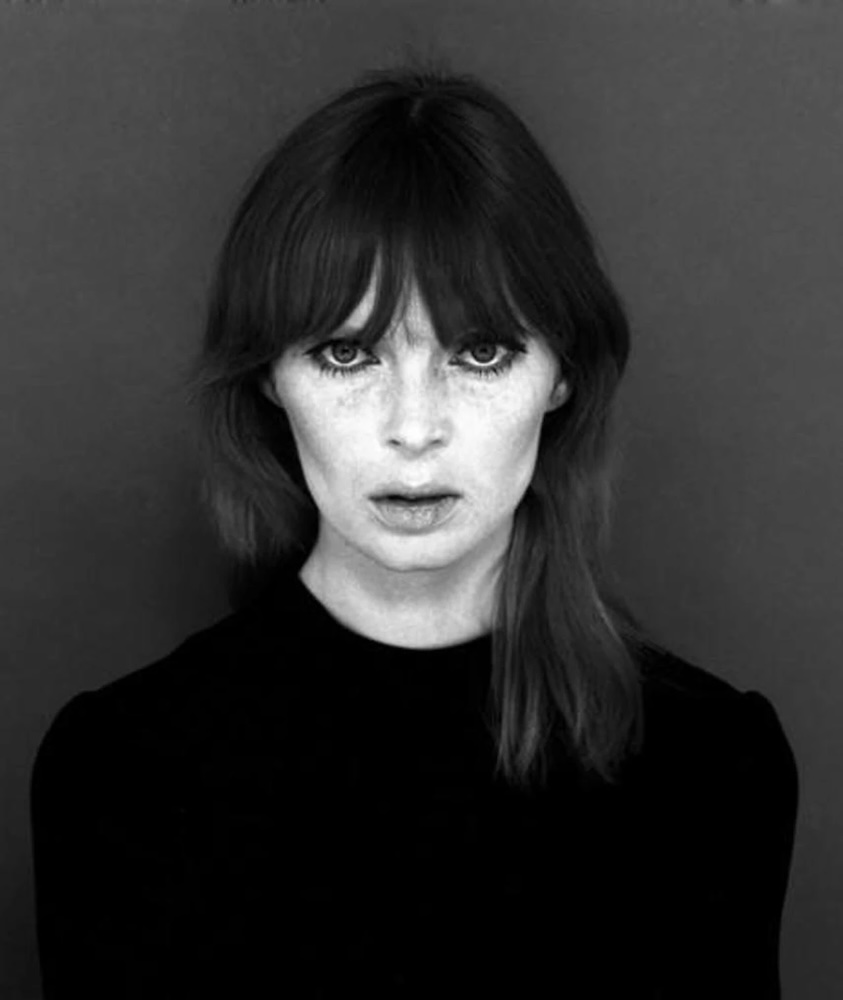
Her name was Nico.
Today, July 18, marks the anniversary of Nico’s death. Had she lived, she would now be 87 years old. Instead, her life was tragically cut short at just 49 on this day in 1988, leaving behind a body of work whose influence has only grown with time.
Groups like The Marvelettes, Martha and the Vandellas, The Ronettes, The Chiffons, and The Angels helped define the sound of the era. It was perfectly produced music with very exact vocals and pristine vocal harmonies — and the image surrounding these women stayed carefully controlled just as every note was. Even when the songs were about powerful feelings such as loneliness or desire, the performers themselves were expected to remain approachable girls next door.
Lesley Gore famously sings, “It’s my party, and I’ll cry if I want to,” yet her performance never fully descends into genuine unraveling; her voice is radiant and energetic, transforming heartbreak into something playful rather than truly unsettling, being itself perfectly adequate party music. Connie Francis, meanwhile, in “Pretty Little Baby,” infantilizes both herself and her romantic partner.
Elsewhere, the American folk revival offered a more grown-up, intellectual version of acceptable womanhood. Artists such as Joan Baez or groups like Peter, Paul and Mary appeared socially conscious, yet they still operated within recognizable artistic boundaries — they were known for covering Bob Dylan’s songs and replacing his nasal, rough-hewn vocals with a shiny feminine sheen, creating a radio-friendly sound. Female performers could be poetic, romantic, even tragic — but they were still expected to invite the audience inward.
There was no accepted archetype for the female outsider.
Male alienation already possessed cultural mythology: the doomed poet, the misunderstood genius, the self-destructive rebel. Men could be abrasive, obsessive, ugly, or emotionally inaccessible and still be framed as authentic artists. Women, meanwhile, were expected to translate pain into accessibility — heartbreak polished into a symphonic serenade, eccentricity softened until it disappeared.
The woman who remained difficult — truly difficult — was treated less like an artist than a problem.
Which is precisely why Nico was so culturally destabilizing. Covergirl Queen, Miss Pop 1966, Chelsea Girl, High Priestess of Weird, Moon Goddess, Warhol Superstar…
Part of what made her radical in America was that she was not American and she never needed to become American. Her European quality — serious, intellectual — introduced an entirely different model of femininity into American pop culture. America in the 1960s was saturated with in-your-face cheerfulness; Nico arrived carrying the psychological torment of post-WW2 Europe. Images of dead bodies haunted her as she wrote in her diaries. Her otherness became an essential part of her image, an alien in New York.
Women who reject social legibility often do so in entirely different ways. More importantly, Nico belongs to a tradition of voices that mainstream culture initially coded as wrong: too cold, too shrill, too operatic, too theatrical, too cerebral, too angry, too weird. Male musicians were allowed sonic ugliness because ugliness read as authenticity. Women were expected to sound easily digestible.
Nico’s voice arrived in the 1960s like a pirate radio signal drifting through pop music. While the decade celebrated youth as liberation, she seemed incapable of assimilating into the surrounding optimism.
What made Nico radical was not simply sadness. Rock and pop music already had plenty of sadness. What it lacked was feminine opacity. Nico refused to explain herself. Refused warmth. Refused seduction. Her raw, unvarnished voice — German-accented, spectral, nearly affectless — denied listeners the emotional release popular music traditionally promises. Her music suggested that isolation was not a temporary condition waiting for redemption, but a permanent geography.
There are cities that create artists, and there are cities that consume them whole. New York, in the mid-1960s, did both.
The city Nico arrived in was electric and filthy, uptown still belonged to old money, while downtown Manhattan — especially around the Factory — belonged to the misfits, to the hustlers.
Into this fever dream walked Nico: tall, glacial, impossibly blonde — a femme fatale fit for the 1960s.
Born Christa Päffgen on October 16, 1938 in Cologne, Germany, Nico carried herself with the detached elegance of postwar Europe. Before arriving in New York, she had already reinvented herself abroad. As a young model living in Paris, she lightened her natural brown hair, helping construct the striking image that would later become iconic. She chose her new name on the advice of a photographer who suggested she pick something more mysterious, more androgynous. The wonder of the name is that it could be anyone from anywhere. The transformation felt symbolic, as Christa Päffgen slowly dissolved into the mythical “Nico”.
By the time she reached New York, she had already modeled for Vogue, appeared in Federico Fellini’s La Dolce Vita, and drifted through Parisian intellectual circles. But America needed her, and Nico needed America, and so New York transformed Nico from merely another beautiful woman into a cultural symbol.
At the center of it all stood Andy Warhol, the white-haired king of pop art, whose Factory operated like a psychedelic royal court. Warhol understood celebrity before Instagram, before MTV, before America even had language for modern fame, and he was convinced that everyone would be famous for fifteen minutes someday. He collected people the way others collected paintings.
And he saw something unforgettable in the former model. He made Screen Tests of her, and she passed with flying colors.
Andrew Warhola Jr. was born in Pittsburgh, Pennsylvania, on August 6, 1928, to Rusyn immigrant parents, and he, too, seemed permanently out of place. Gay, self-described as asexual, awkward, defiantly nonconformist, he would dedicate his life to both manufacturing popular culture and dismantling it. He and Nico formed an immediate connection, united by a distinctly dry, often absurd sense of humor and a shared detachment from the worlds they inhabited.
She became one of Warhol’s “superstars,” though the term barely captures what the Factory really produced. These were not stars in the Hollywood sense — they were spectacular exhibits performing for cameras 24/7.
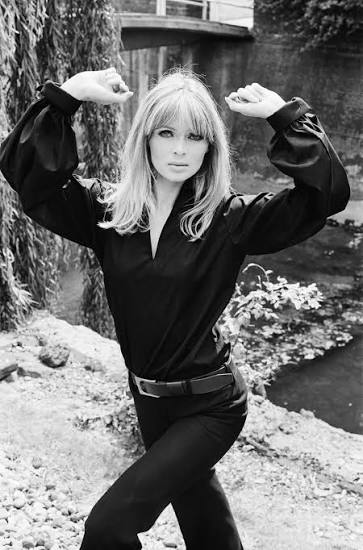
Then came The Velvet Underground.
The Velvet Underground sounded like New York itself. 24-year old Lou Reed wrote songs about addicts, drag queens, sexual obsession, and heartbreak with the cold precision of a street poet. John Cale layered avant-garde noise over primitive rhythms until the music felt explosive.
Warhol became their manager, and more than that, their protector. He ended up financing their debut album, but Andy didn’t see Lou Reed as having enough personality or charisma to serve as the front-man. He knew the band needed tension — beauty against ugliness, innocence against corruption, femininity against masculinity. Nico became the missing element.
The collaboration was never entirely comfortable. Reed reportedly resisted Warhol’s insistence that Nico sing with the band, and tensions simmered beneath the surface almost immediately. But discomfort became part of the art. She brought an unforgettable feminine mystique to the album, and The Velvet Underground & Nico captured a collision of personalities — which turned out to be exactly what was needed to create the perfect record. Without Nico, it is difficult to imagine the record achieving the landmark status it ultimately attained, for it was precisely her sepulchral voice that made the music feel unlike anything else to emerge from the decade.
The bad news was that people weren’t buying it — America was still busy drinking up the Summer of Love while the Velvet Underground documented the great hangover.
The album flopped. Radio ignored it. Critics struggled to categorize it. The band dressed in black leather and dark sunglasses, looking less like rock stars than outlaws drifting through New York’s underground scene.
There were no catchy singles designed to top the charts as even the most “accessible” tracks carried a morose aura, and the fact that the lead singles were sung by a foreigner was rebellious in itself.
Distribution was poor from the start, further hampered when Eric Emerson’s financial troubles forced early withdrawals, and advertising was nearly nonexistent. Instead of a flashy title, the provocative album cover presented only a painted banana by Warhol—turning the album into an enigmatic art object.
Brian Eno once said that while few people bought the album initially, everyone who did started a band. Fearless and experimental, it reshaped the possibilities of popular music and helped pave the way for punk, post-punk, indie rock, grunge, and countless underground movements that followed.
Nowhere was Nico’s power clearer than on All Tomorrow’s Parties. Written by Lou Reed, the song unfolds through a hypnotic psychedelic arrangement of prepared piano, droning viola, chiming guitars, and minimalist percussion, while John Cale’s repetitive piano figure acts less like melody than incantation amid a fog of metallic resonance. In the song, she sings about a woman trapped in endless performance — changing costumes, preparing for parties, endlessly reconstructing herself for a society that consumes her. Another singer might have delivered the lyrics with theatrical pity. Nico utters them deadpan in a low, steady voice that barely rises or falls, as the detachment itself becomes the emotion.
It was the complete opposite of the femininity American pop music had trained audiences to expect.
She never wore dresses or skirts. One reviewer at that time wrote that the singer hypnotized audiences with her “divinely sensual but sexless look,” while another described her as looking and sounding like “a breathtaking alien.”
Nico, meanwhile, pursued a solo career. When she released Chelsea Girl in 1967, the world still saw her as Andy Warhol’s ice princess, the woman standing slightly apart from the chaos of New York’s Factory scene. But beneath the carefully framed image was an artist already fighting for control of her own legacy.
On first listen, Chelsea Girl sounded deceptively accessible. Written in part by Lou Reed, John Cale, and Jackson Browne, the album wrapped her cavernous voice in delicate folk arrangements and baroque flourishes. But Nico famously despised the record’s instrumentation, including the ornamental strings, and especially the flute, which made her cry when she first heard it.
The summer of 1968 only deepened her growing sense that the optimistic mythology of the decade was collapsing. Nico later identified two events in particular as turning points: the shooting of Andy Warhol by Valerie Solanas on June 3, 1968, and the assassination of Robert F. Kennedy just two days later. She described the feeling as a kind of collective vertigo, society spinning faster and faster like a carousel until everyone became sick. The attempted murder of Warhol affected her especially deeply, although he survived, Nico believed he was never truly the same afterward, and that his passion for art gradually faded in the years that followed. Her attachment to him endured long after their Factory years, as she would later dedicate the song “The Falconer” to Warhol.
Her true transformation arrived with 1968’s The Marble Index, one of the most uncompromising records ever made, which sounded less like late-’60s rock and more like the aftermath of civilization.
There was nobody doing that sort of gothic folk stuff. It was like something from another age, or another planet. —John Cale
Released in 1968 on Elektra Records, The Marble Index marked a complete rupture from the folk-pop material Nico had recorded on Chelsea Girl only a year earlier; she wrote nearly all of The Marble Index herself, and picked up the harmonium as her instrument of choice, with which she would continue to perform for years to come. She pursued a radically austere sound shaped primarily through her partnership with John Cale. Cale arranged the album using harmonium, viola, piano, organ, bells, and other droning instrumentation, intentionally stripping away conventional rock structures, percussion-heavy rhythms, and melodic warmth. The album drew heavily from European classical composition, avant-garde minimalism, German romanticism, and liturgical music. The harmonium became central to the record’s architecture, generating long static tones that gave tracks like “Frozen Warnings,” “No One Is There,” and “Evening of Light” an oppressive aura. Her vocals gained a new kind of confidence, wistful and brooding.
Nico wrote the introspective lyrics using fragmented symbolic imagery rather than narrative storytelling, constructing songs around recurring motifs of freezing landscapes, death, mirrors, ruins, isolation, and spiritual emptiness. The writing reflected influences from French symbolist poetry, existential literature, and her experiences growing up in postwar Germany amid physical and psychological devastation. Songs such as “Frozen Warnings” and “Julius Caesar (Memento Hodie)” contain little linear structure, instead operating through disconnected visual phrases and ritualistic repetition. John Cale later described the album as deliberately anti-commercial and Elektra struggled to market it. At the time of release, many critics treated the record as inaccessible, with the album’s stark black-and-white cover photography reinforcing its somber aesthetic, presenting Nico less as a pop performer than as a distant, monumental figure detached from contemporary rock imagery.
Despite limited commercial impact at release, The Marble Index became one of the seminal records for alternative music.
After releasing Desertshore (1970) and The End… (1974), she spent years performing in small clubs, art spaces, and post-punk venues across Europe with little financial stability, struggling against worsening heroin addiction, often accompanied only by harmonium or minimal backing musicians. Younger musicians emerging from punk and gothic subcultures increasingly viewed her as a visionary and a foundational influence, young fans called themselves “Nico-teens”, and various new bands that later became famous, including Sisters of Mercy and Gene Loves Jezebel, served as opening acts for her. Many considered the gritty German chanteuse to be the first ever Goth girl; Peter Murphy of Bauhaus famously said that “Nico was Gothic, but she was Mary Shelley to everyone else’s Hammer Horror.” In the following decade, her sound gradually shifted away from the austere harmonium-based minimalism that had defined her previous solo work. By the time of Drama of Exile (1981), she was working with full rock band arrangements, introducing a more rhythmic and guitar driven energy into her music, while her voice retained its dark, ethereal quality. Her final studio album, Camera Obscura (1985), introduced heavier synthesizers and contemporary production textures.
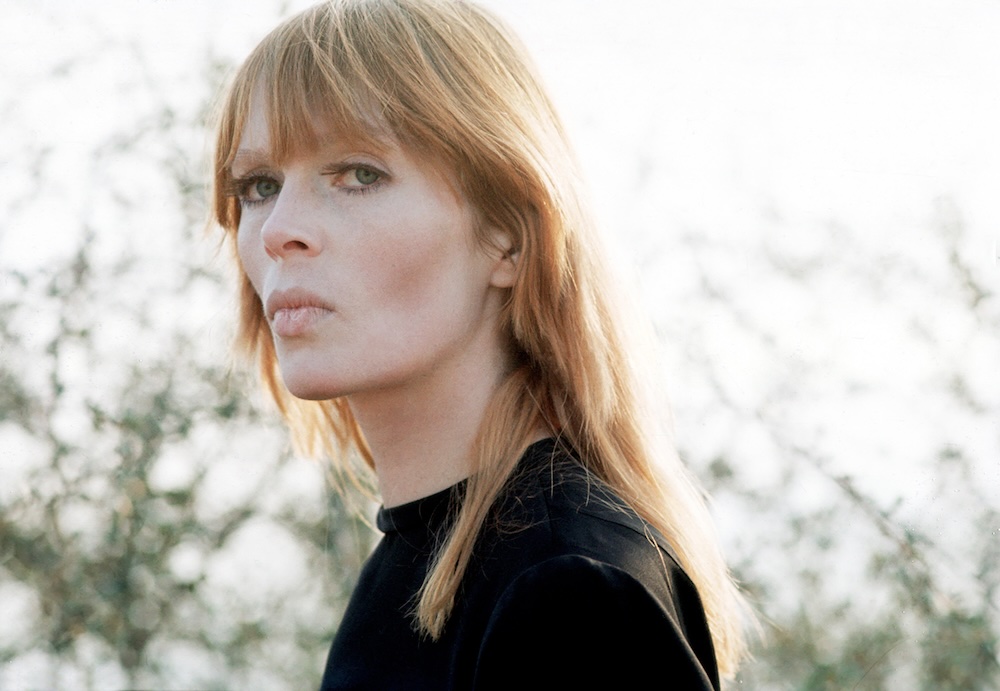
At the same time, Nico could be provocative and casually cruel. She once described herself as a “Nazi anarchist junkie,” a phrase as confrontational as the persona she cultivated around herself. At other times, she said she identified with Jewish people. She enjoyed making up stories, which leads to confusion among historians and journalists to this day. In interviews, Nico comes across as delicate and shy, her manner soft-spoken and hesitant, often smoking as she spoke—an almost protective ritual inside the glare of attention.
She also had a well-known relationship with French actor Alain Delon, from whom she claimed to have had her son, Ari, though Delon never publicly acknowledged paternity. During her last years she overcame her heroin addiction, as despite her self-destructive tendencies there was still a stubborn will to survive. Nevertheless, she died on July 18, 1988, under unusual circumstances. While vacationing in Ibiza, Nico suffered a cerebral hemorrhage after falling from a bicycle, and she died later that evening due to medical negligence at age forty-nine, and was buried in Berlin alongside her mother. By the time of her death, critical reevaluation of her solo work had already begun accelerating, particularly among musicians and critics who viewed albums like The Marble Index and Desertshore as a landmark for gothic, experimental, and avant-garde rock music.
With her unmistakable style and unwillingness to compromise, Nico became a blueprint for generations of maverick artists to come. Long before goth and post-punk had names, she embodied their core tenets: stark minimalism, haunting beauty, emotional detachment, and a fascination with darkness. She even made black hair trendy as part of an alternative aesthetic. Imitated, but never replicated, her influence would echo through the work of artists like Siouxsie Sioux, Patti Smith, David Bowie, Bauhaus, Joy Division, and countless others.
Bob Dylan wrote “I’ll Keep It With Mine” for her, a song she later recorded on Chelsea Girl, while Jim Morrison dedicated poems and notebook fragments to her during their turbulent relationship in the late 1960s. Andy Warhol immortalized her in films and Screen Tests produced at the Factory. Decades later, the philosopher Jean Baudrillard reflected on her in his essays.
But Nico’s lasting importance goes beyond a specific genre or scene.
She permanently expanded the characters available to women in music.
Nico proved that a woman did not need to appear comforting in order to create meaningful art. She did not soften herself for audiences. She did not explain herself. She did not transform melancholy into something cute and reassuring.
She simply remained herself. She fought for artistic independence and it is that noncompliance that became revolutionary.
Looking back on her attempts to build artistic independence, she observed that when a woman fought for control of her own work, people rarely interpreted it as intelligence or strategic thinking. “When you are a woman,” she remarked, “these people think you are just being difficult, not intelligent.” It was a revealing distinction.
Not much has changed, as today, people expect women in music to be pretty, sing pretty, and fit in. Anything a bit out there is easily dismissed. Online algorithms promote only the music that needs to be promoted, produced by giant corporations.
Nico influences me deeply as both a singer and songwriter through her sincerity and her refusal to fit inside neat little boxes. She dared to be different — she was not afraid to be a bit strange, a bit distant, and entirely herself in a world that demands women to stay palatable and easy to understand. Nico understood that sometimes less is more — a single phrase can carry more weight than vocal acrobatics with no feeling.
Expectations for women may not have changed, but every woman who breaks the mold changes the world — each in her own way.
About the author: Diana Ringo is a post-punk / darkwave singer-songwriter. Her second vocal album Clowns in America was released on July 3, 2026.
About the Author