Zaatar
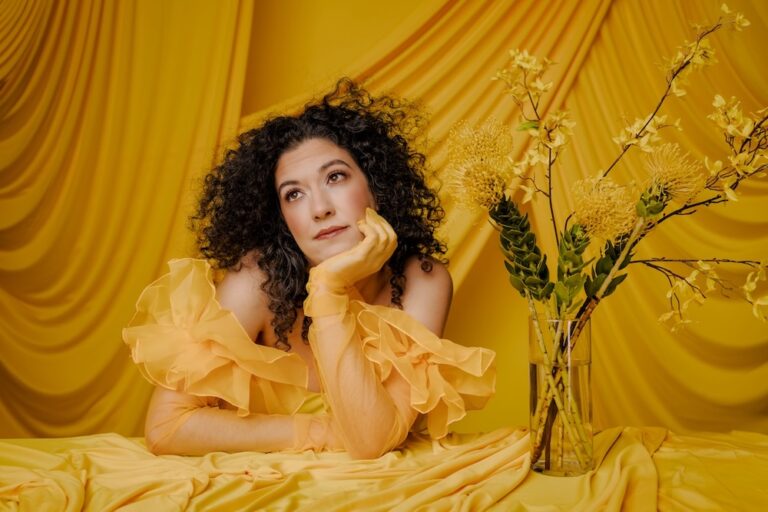
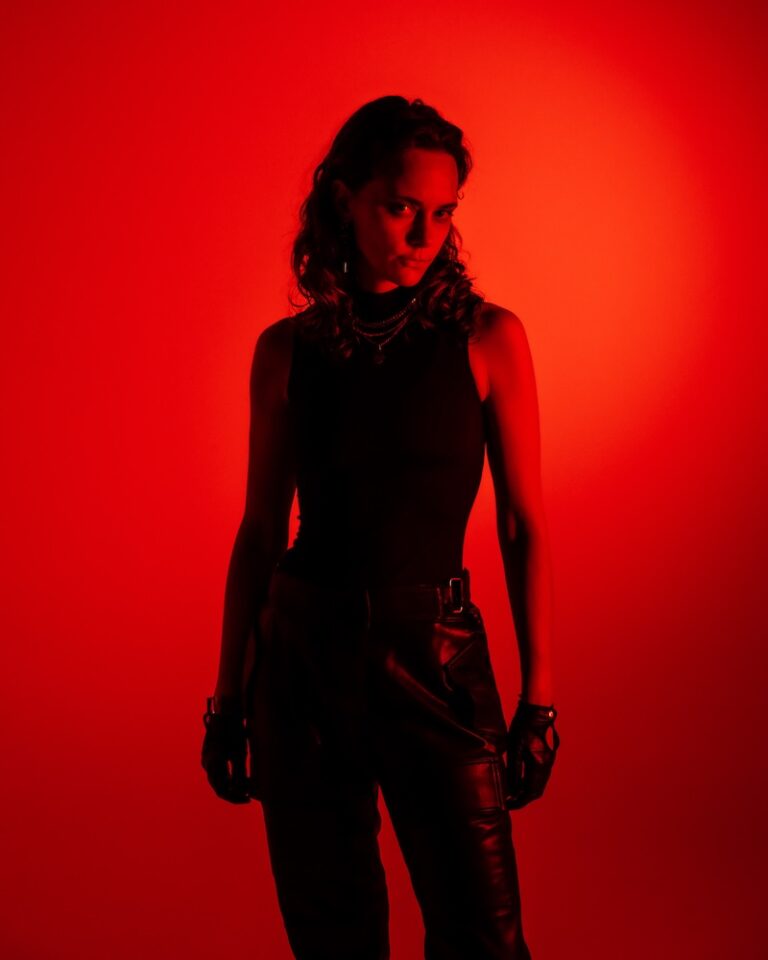
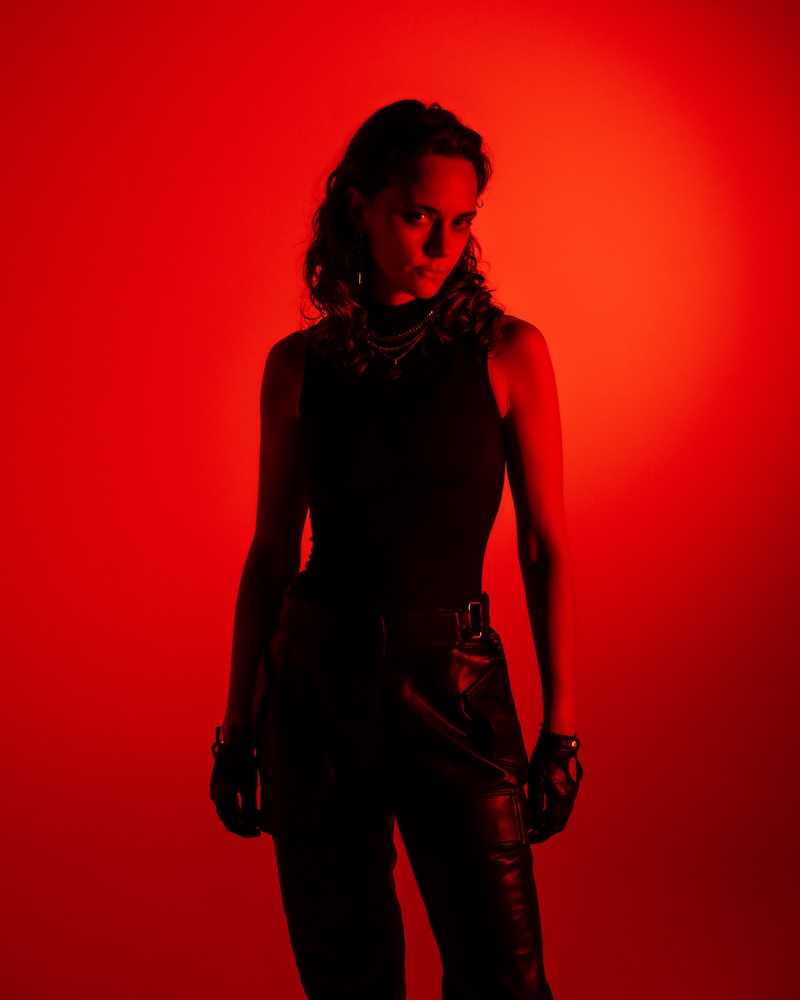
The Belgian-Moroccan DJ and producer blends icy electronic textures, mechanical vocals and raw rock percussion on her latest release for Breathing Records.
Zaatar has been carving out a distinctive space at the intersection of EBM, new beat and post-punk, drawing on the mechanical pulse of late-’80s and early-’90s underground electronics while giving those influences a distinctly contemporary edge. Raised in Morocco, with Belgian roots and currently based in France, she brings a fluid, cross-cultural perspective to a sound defined by dark synth lines, muscular rhythms and a tension between electronic precision and raw human energy. First gaining international attention with “Abiad Al Layali” on French label Ritmo Fatale, Zaatar has since built a growing catalogue of club-focused productions, including “Mortal Come Back”, “Zankat Mimosa” and “Leaving For The Sky”, culminating in her 2025 EP The Sound of Z, a tribute to the sounds and aesthetics that shaped her musical identity. Her reputation has continued to grow beyond the studio, with performances at La Gaîté Lyrique, Fuse, Renate, Positive Education, Montreux Jazz Festival and Grauzone, among others. Named by DJ Mag France as one of its artists to watch in 2026, she is also expanding her influence through Dead-Or-Alive?, her own event series connecting EBM, post-punk, live performance and club culture.
On her new single, “Bahnsteigkante”, Zaatar takes a different route, experimenting with the collision of rock and electronic music. Built around a metallic FM bassline that doubles as a guitar-like riff, the track pairs an icy, machine-driven vocoder with raw, hard-hitting percussion, drawing on the industrial tension of DAF and Robert Görl. The result is a striking hybrid that feels both mechanical and physical, with a rougher, less club-functional edge. “Bahnsteigkante” appears on Breathing Records’ compilation series INHALE Vol. 2.
Your new single, “Bahnsteigkante”, was born from an experiment blending rock and electronic music. What sparked the idea for this track?
It started with a new instrument. I was working with FM basses, which are much snappier than a deep sub-kick combination, and that gave me a metallic energy right away. The bass almost sounded like a guitar riff, so one synth ended up playing both bass and riff. That sequence generated the whole track. It made me want to answer it with drums that were less techno-coded, as if I were a drummer in a band responding to a guitar line. A fairly conventional line, but very reminiscent of the EBM and New-Beat years.
The song combines an electro vocoder with raw, hard-hitting rock percussion. How did you approach bringing these contrasting elements together?
Usually I make tracks for the club, but this time I just followed my instinct and made something I liked. For the voice, I wanted something cold. My own voice would have pushed the track toward rock, and I wanted to keep it hybrid. The vocoder gave me that mechanical feel, a machine speaking. So you have a synth playing a guitar, a machine voice, and synthetic drums playing the role of acoustic ones. I was inspired by DAF and Robert Görl, where clean synth lines clash with drums that aren’t fully in phase with the machine. That tension is what interests me, and it’s in the lineage of Kraftwerk’s Man-Machine.
The title “Bahnsteigkante” is German for “platform edge”. What does the title mean to you, and does it connect to the atmosphere or concept behind the track?
It was probably unconscious. I needed a mechanical voice, and my brain went straight to the train platform: you’re waiting, and a robotic voice announces the train. I lived five years in Berlin, and that stays with you. In French or English, “platform edge” wouldn’t have worked. Bahnsteigkante has so many hard sounds, it’s much less round than a Latin language, so it’s even more robotic. It’s the word I say through the vocoder throughout the track, but I didn’t want it to be recognizable. It becomes abstract, and you can’t tell if it’s a synth speaking.
The single appears on Breathing Records’ compilation series INHALE Vol. 2. How did the track come to be part of the project, and what appealed to you about contributing to the compilation?
Breathing Records reached out and asked me for a track. I think they were already interested in my music because Matte Blvck had been playing my tracks in the playlists at the start of their shows. It’s a nice loop: I use concert tracks in my club DJ sets, and they use my club tracks in their concert playlists. That’s where you start to see bridges forming between the two scenes.
Your sound draws heavily on EBM, new beat and post-punk, particularly the music of the late ’80s and early ’90s. What first attracted you to these genres?
Depeche Mode were my way in. I loved that in-between space: it could be pop, it could be electronic, but you always felt the human behind it. Then Boy Harsher confirmed that interest. The first tracks I heard made me want to keep digging in that direction.
You describe yourself as a Belgian-Moroccan artist based in France. How have your different cultural backgrounds shaped your musical identity and creative perspective?
I grew up in Morocco, my mother is Belgian, I live in France, and I spent five years in Germany. All of that is part of my internal software. My identity is fluid: it comes forward in some moments and steps back in others, depending on the situation, the emotion, the period of my life. Some tracks reflect it clearly, others less. On this one, you don’t really hear Morocco. Maybe in the choice of notes, and perhaps a little in the pad in the middle of the track, but it’s very light. Germany is more obvious, through the title and the language. The five years in Berlin matter too, even if they don’t weigh as much as the years in Morocco. Experiences accumulate and come out differently each time, and people like to categorize, but I belong to a generation of artists who are hard to simplify.
You’ve performed at venues and festivals including La Gaîté Lyrique, Fuse, Renate, Positive Education and the Montreux Jazz Festival. How does your approach change depending on the venue and audience?
It depends on the slot. At 5 a.m. in a club, I play more linear sets that lead people into a kind of mental trance. Early in the night, I lean toward a concert spirit, something that surprises people and sparks their curiosity. At peak time, I alternate between the two: you can’t exhaust the room before the end, but you still have to give them the big moment.
Since 2025, you’ve been developing your own event series, “Dead-Or-Alive?”, bringing together EBM, post-punk, live concerts and club culture. What inspired you to create the project?
I wanted to contribute to the scene in Lille, the city I live in. The idea was a format that combines a concert and a club night: the concerts start early and the evening ends early, which suits most people, so it’s really two evenings in one. There was an artistic drive, but also a cultural one: giving something back to the people of Lille. I also tour a lot and have an extensive network, so it’s a way to turn those encounters into stronger ties, invite artists and bring them to the local scene. I always insist on having humans on stage, because the brain reads it as someone “physically” performing, and I like to book bands that blend electronics with a human, live touch.
Finally, with “Bahnsteigkante” introducing another side of your sound, what would you like listeners to understand about Zaatar as an artist that they might not have discovered through your previous releases?
I make music on instinct, and I treat my production tools like a playground. Usually I think about what will work in a club. With Bahnsteigkante I let that go and just followed an idea: a new instrument, a snappy FM bass, and everything else grew from there. I don’t have a recipe. I’d rather follow whatever inspires me all the way through, even if it leads somewhere I didn’t plan. This track shows that side of me: less functional, more playful, and a bit rawer.
About the Author